Sushi Gold
Delivery Website · Brand Relaunch · SEO

Sushi Gold is a sushi, pizza and hot food delivery service in Odesa with years of history and an audience that already knows the name. What it didn't have was a working digital front door — and, as it turned out, control over its own one.
The previous site was built on Tilda by a developer who never handed over access to the original domain. So the brief was larger than a redesign: build a new site on a domain the client actually owns, keep the existing audience, and grow beyond it.
Work stages
Access & Domain Audit
Mapped what the client owned and what they didn't. Registered a new domain under the client's own account — ownership first, design second
Competitive Research
Studied delivery services across the market — specifically how the ordering flow is built, where users drop off, and what a fast checkout actually looks like
Resilience Strategy
Designed the stack in layers so that no single external service can take the business offline. A direct lesson from the Tilda situation
Build
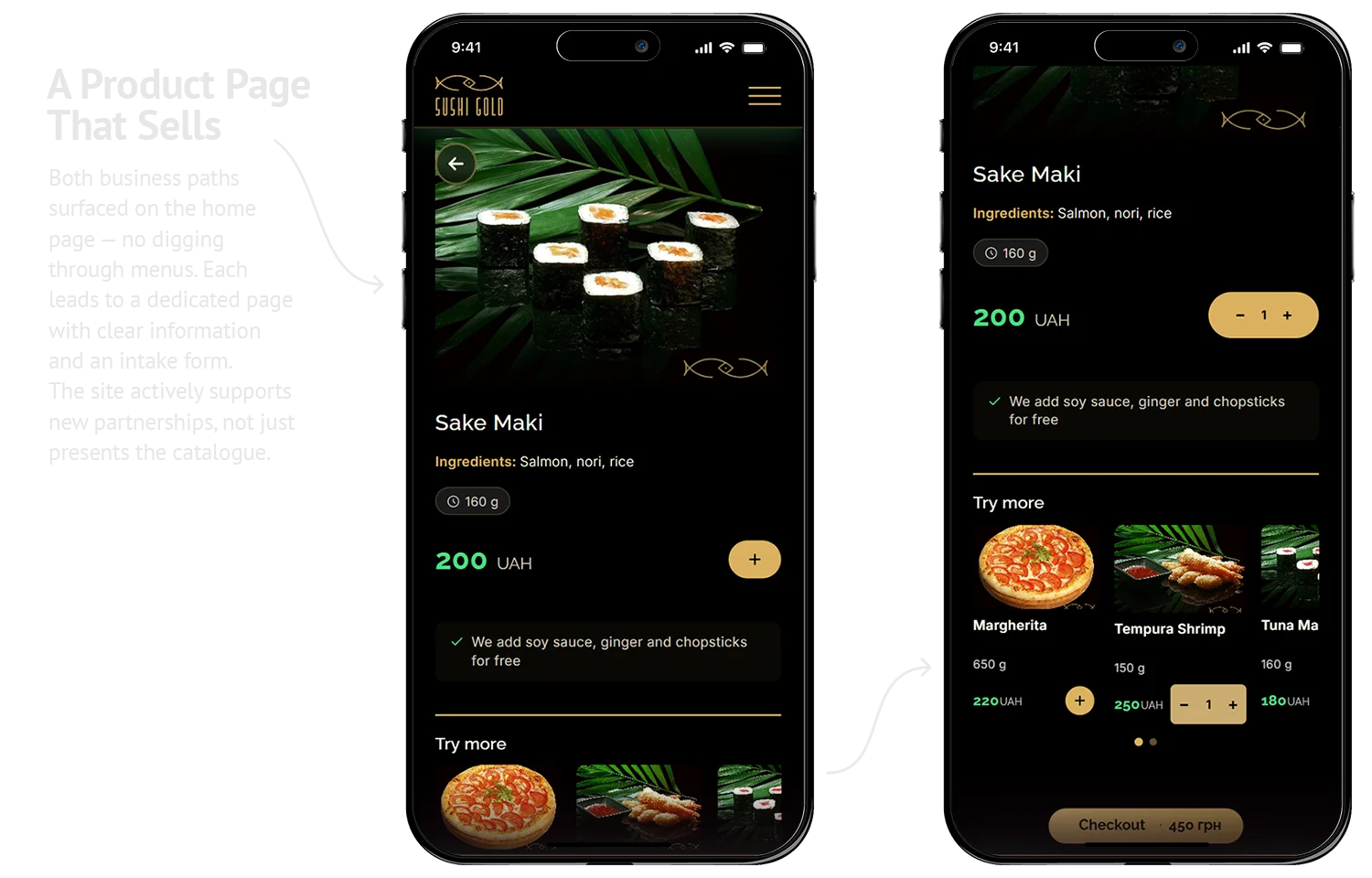
Static Astro site, full menu catalogue, cart, checkout to Telegram, personal account on Supabase, three languages
Content & Photography
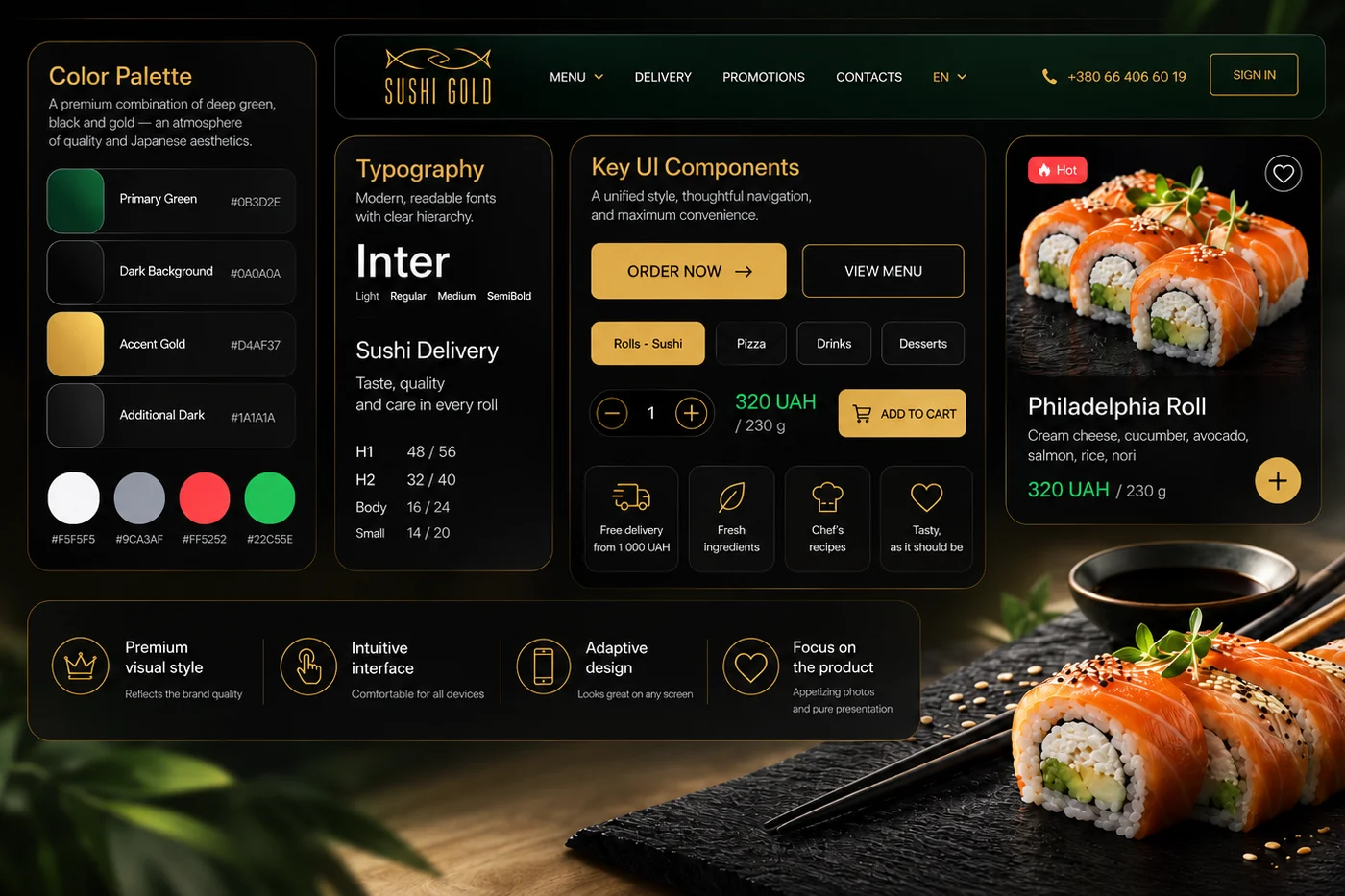
Wrote the copy and prepared the food photography as selling material, not decoration
SEO & Analytics
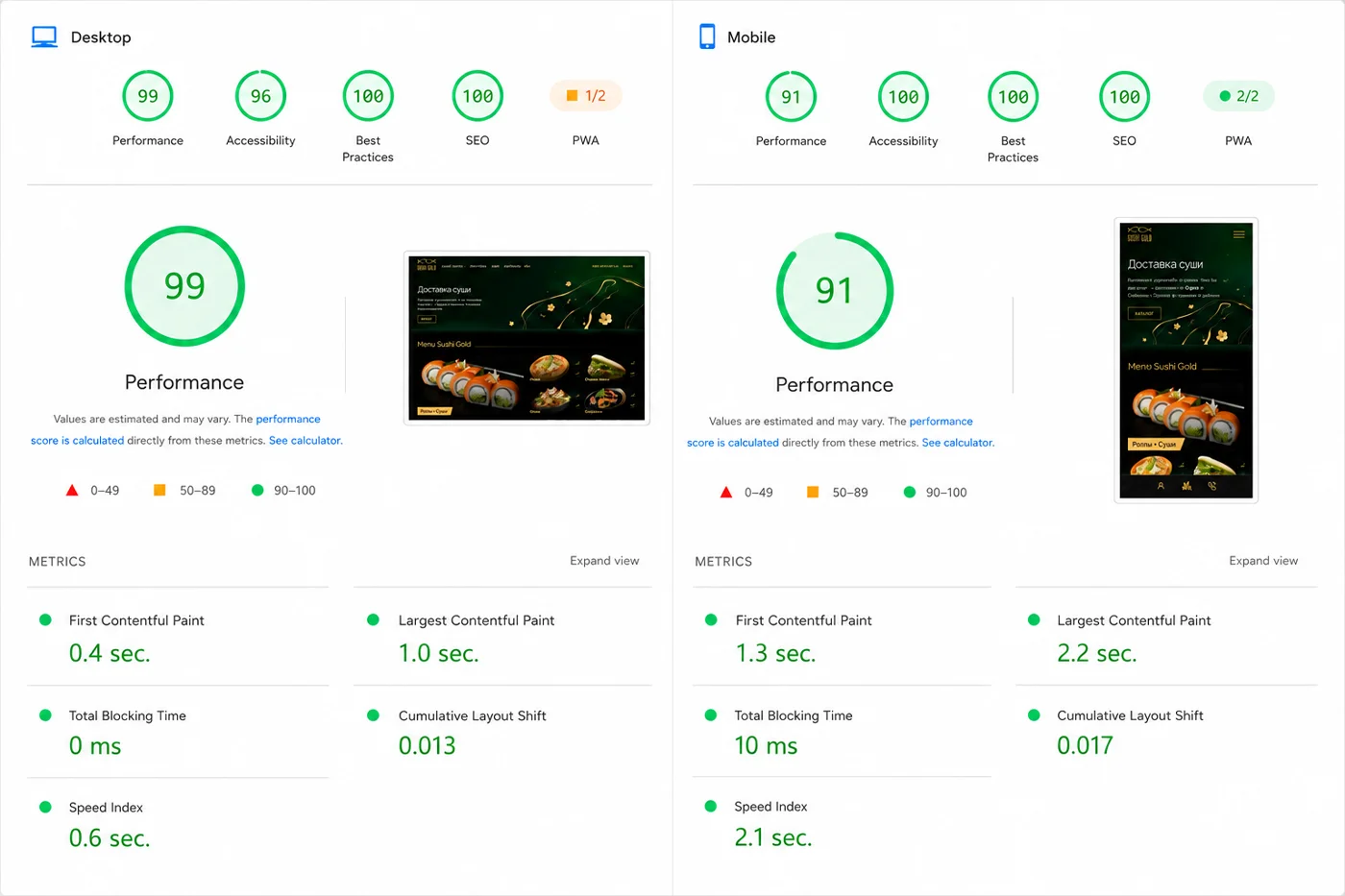
Structured data, local search optimisation, Google Analytics — visibility for both search engines and AI assistants
Relaunch Campaign
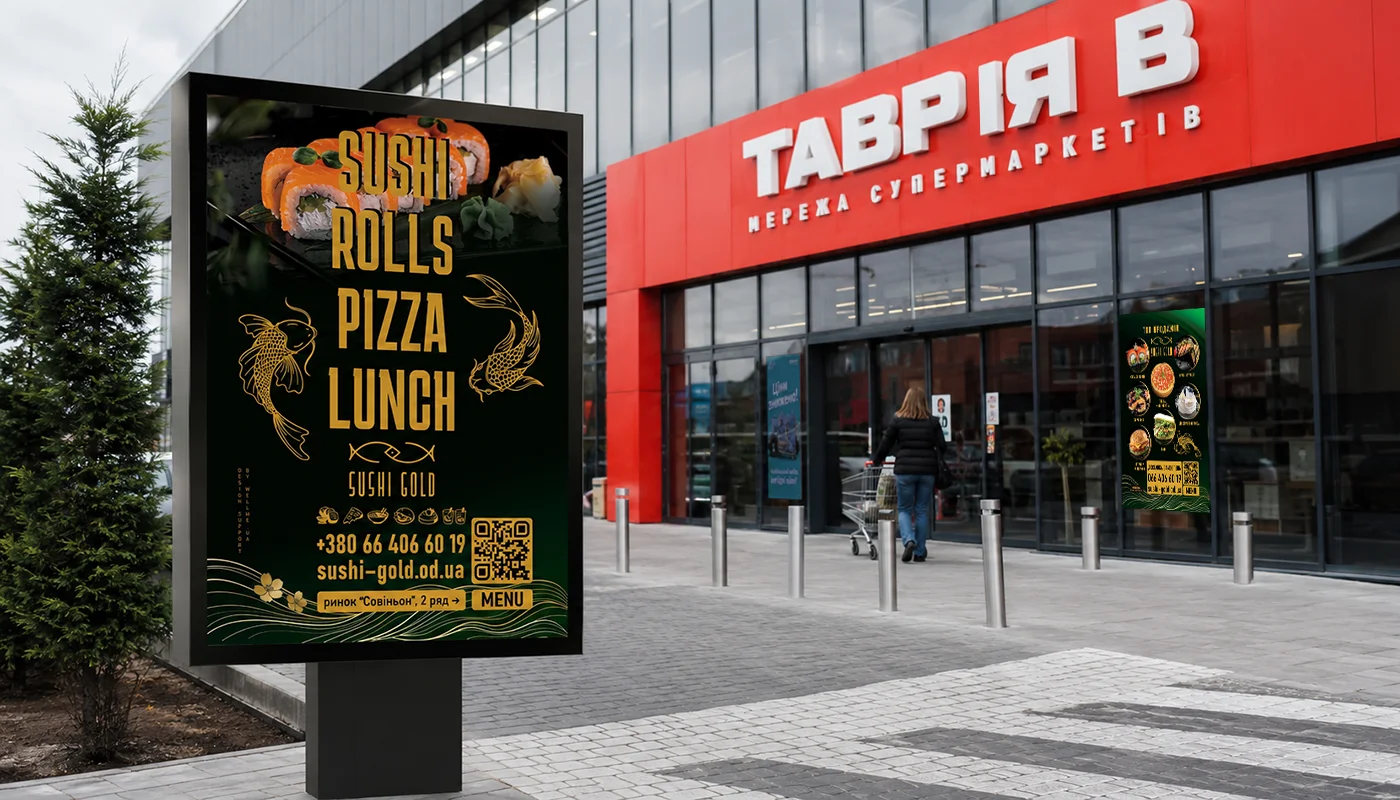
Print design, a printed menu, business cards, a street-side banner outside the premises, and social posts to tell the existing audience that the address has changed
Starting Point
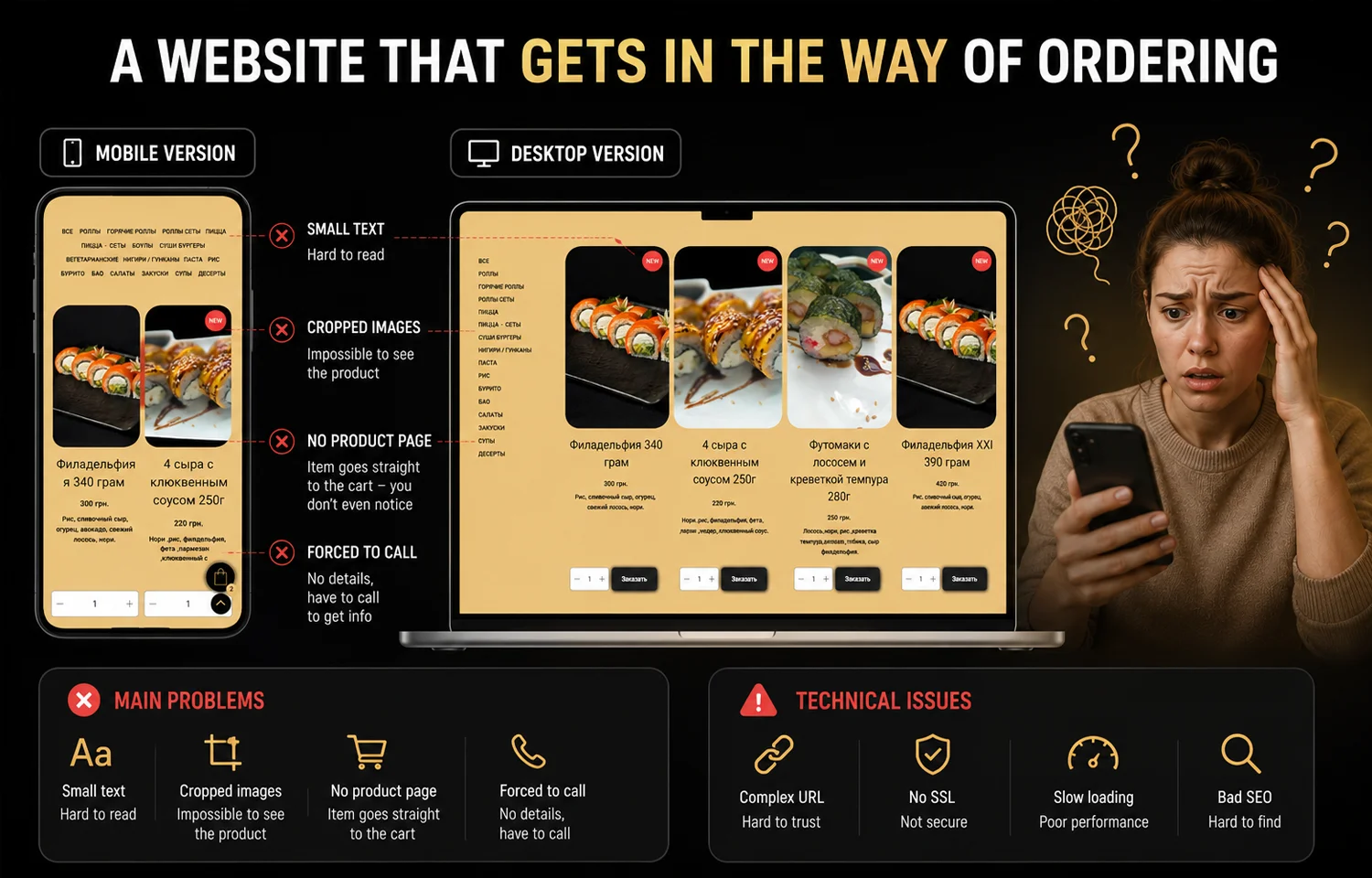
The old site did the minimum and not much more. Built on Tilda, it was slow to navigate, the catalogue was hard to browse, and the checkout took more steps than anyone is willing to give. The predictable result: most customers gave up on the site and ordered by phone.
The deeper problem was ownership. Access to the original domain stayed with the previous developer, which meant the client's search visibility, their traffic, and their brand address were all sitting on someone else's shelf. Rebuilding on that foundation wasn't an option.
So the task became a relaunch — a new, closely matching domain the client fully controls, with the existing audience carried over and the reach extended.
Built to Outlive Its Own Stack
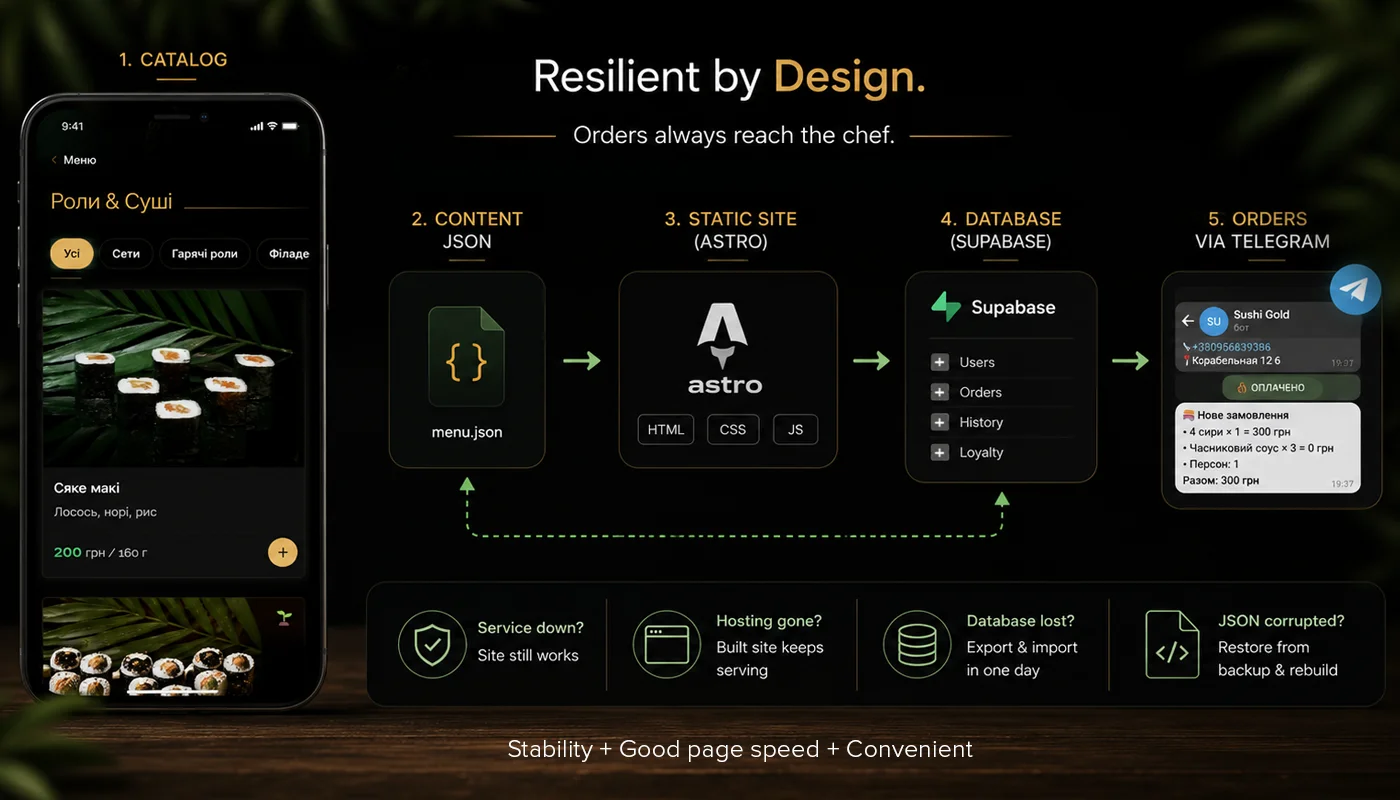
Tilda left the Ukrainian market. That single fact shaped the entire architecture: we designed the site so that losing any one service does not stop the business from taking orders.
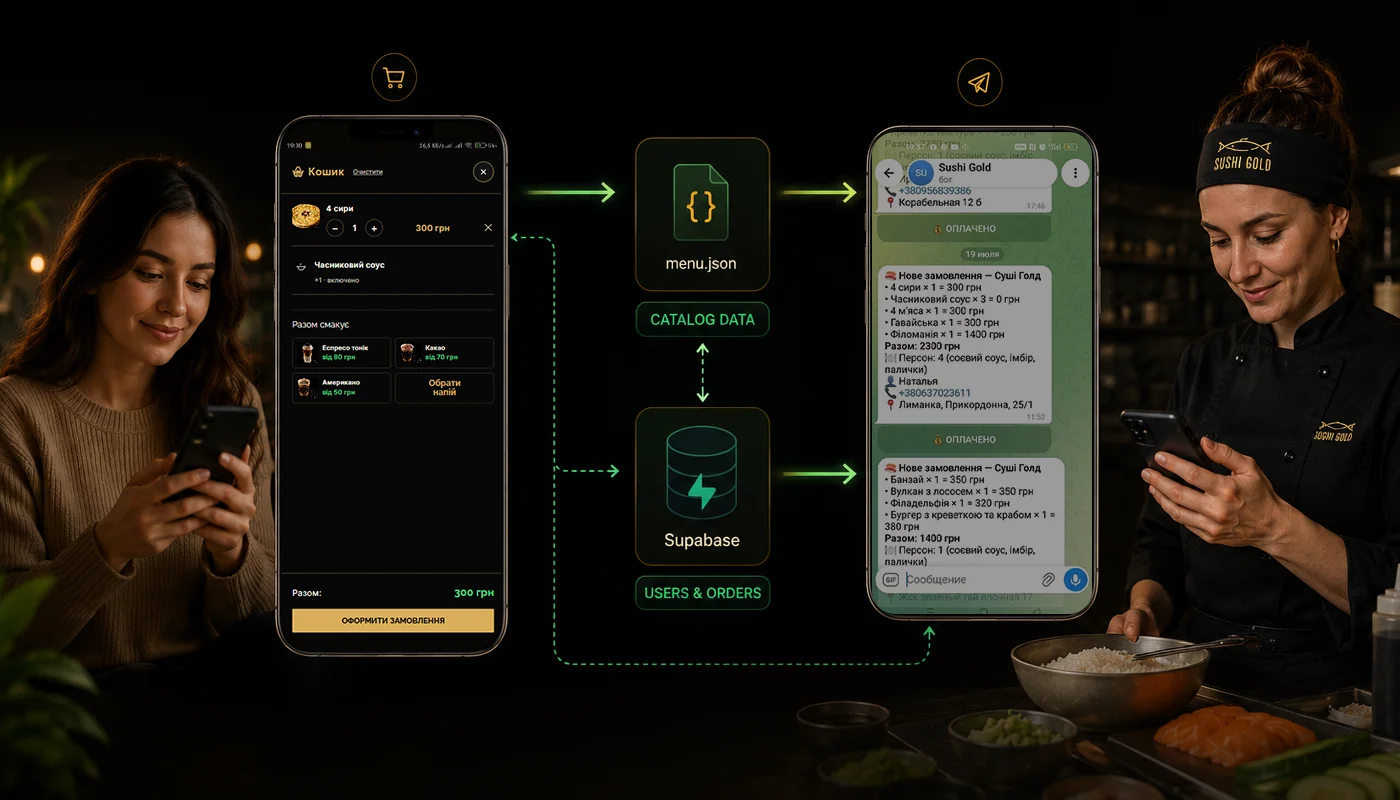
The content layer — menu, prices, translations — lives as plain JSON on Ukrainian hosting, edited through a small admin panel. Astro reads it at build time and generates static HTML, so the site itself depends on nothing external to stay online. The dynamic layer — accounts, order history, loyalty — runs on Supabase, which is open source and can be dumped and moved to a Ukrainian VPS in a day. Orders go through Telegram, independent of the database.
If Supabase goes down, the site still works and orders still arrive. If the build tooling disappears, the already-generated HTML keeps serving. Every layer can be replaced without taking the others with it. For a business operating in Ukraine, that isn't over-engineering — it's the requirement.
Ordering, Reworked
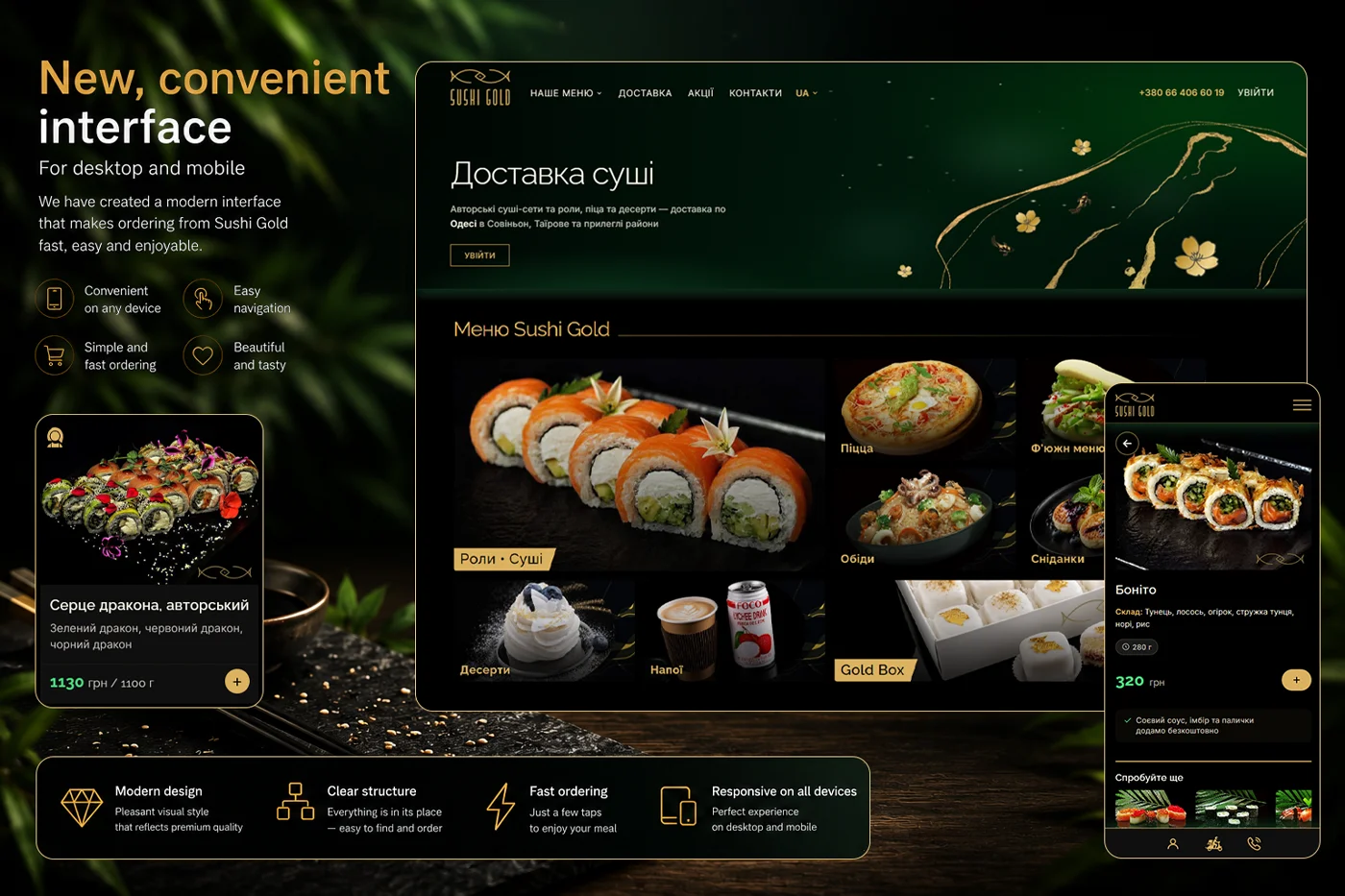
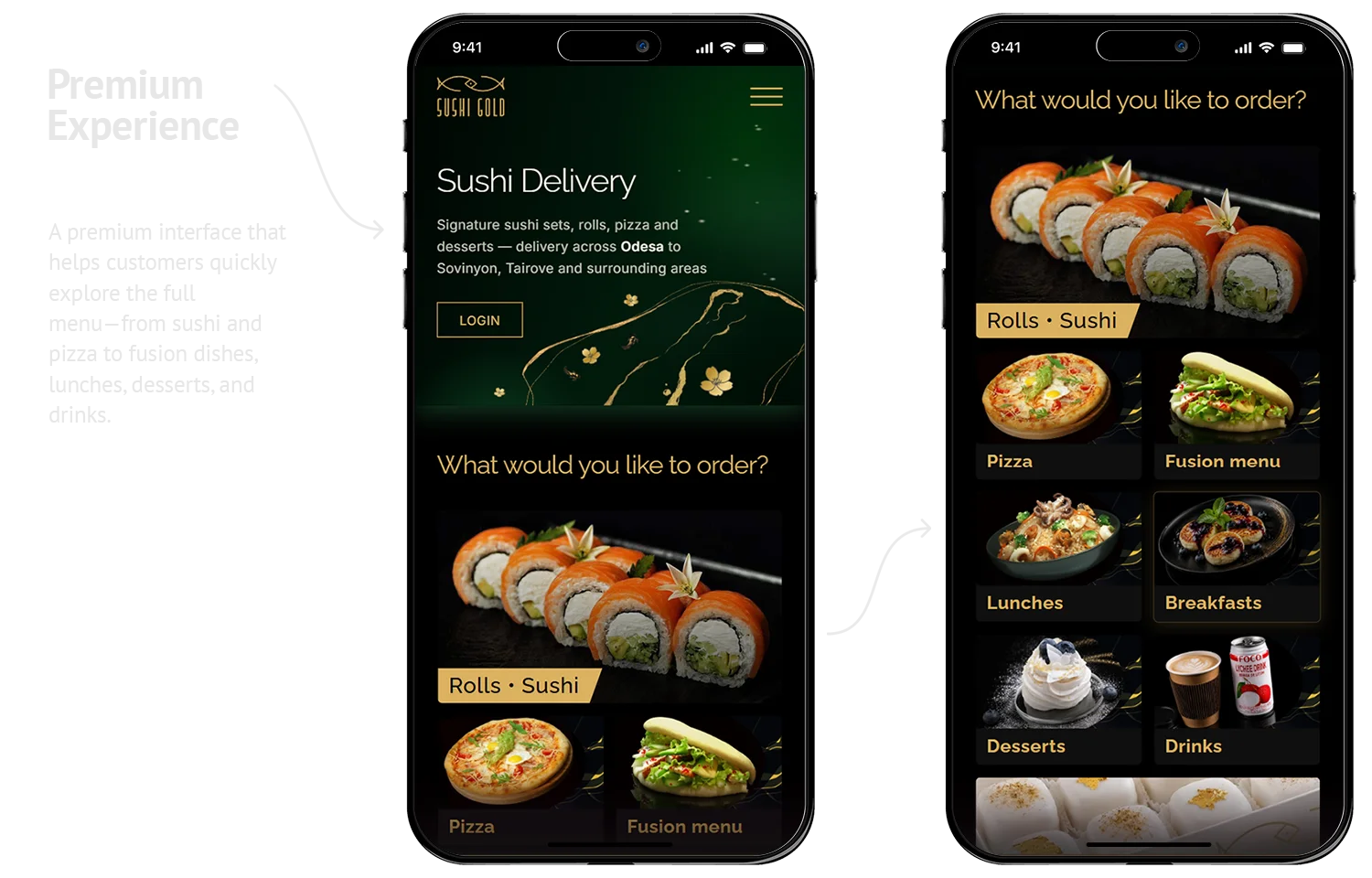
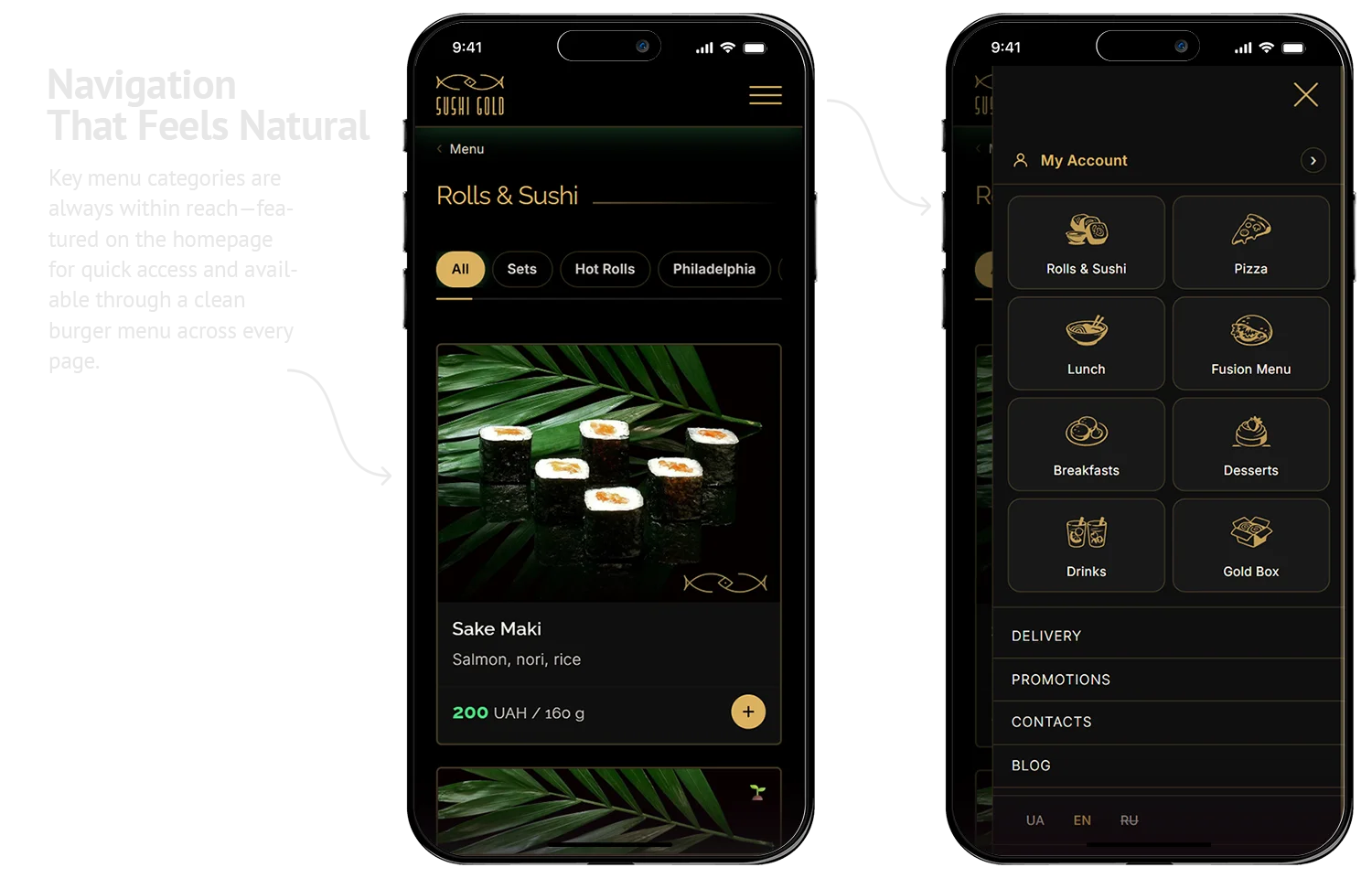
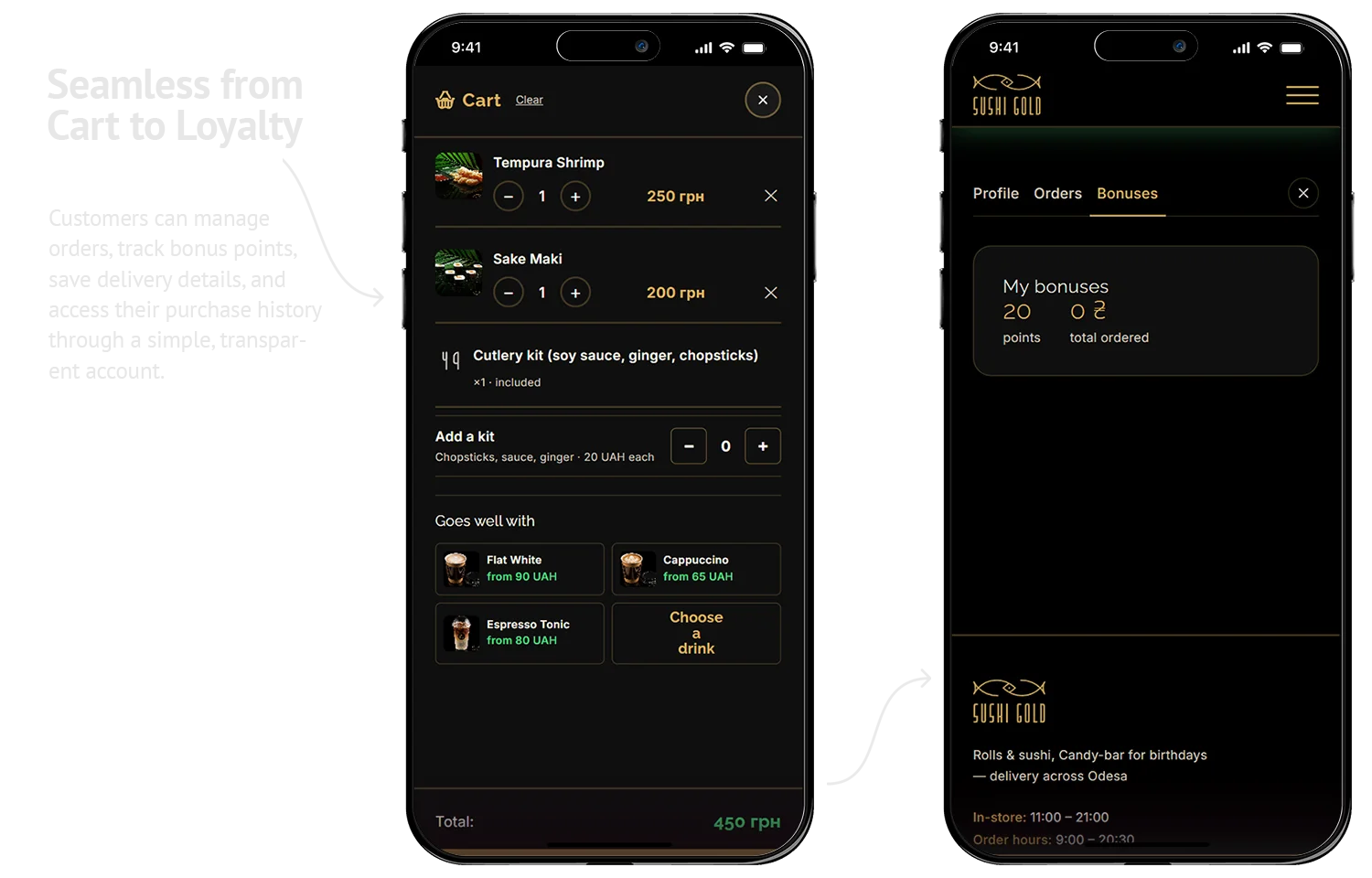
We rebuilt the path from menu to order around one question: how few decisions can this take? A full catalogue with real category logic, a cart that survives a page reload, and a checkout that ends in one action — the order lands directly in the owner's Telegram, with the total recalculated server-side rather than trusted from the browser.
Returning customers get a personal account: phone-based sign-in, saved profile, order history and loyalty. The site is fully trilingual — Ukrainian, Russian and English — with the menu itself localised, not just the interface.
Everything is mobile-first, because that is where the orders actually come from. A chat assistant is the next step — answering the routine questions before they reach the phone.

Being Found Again
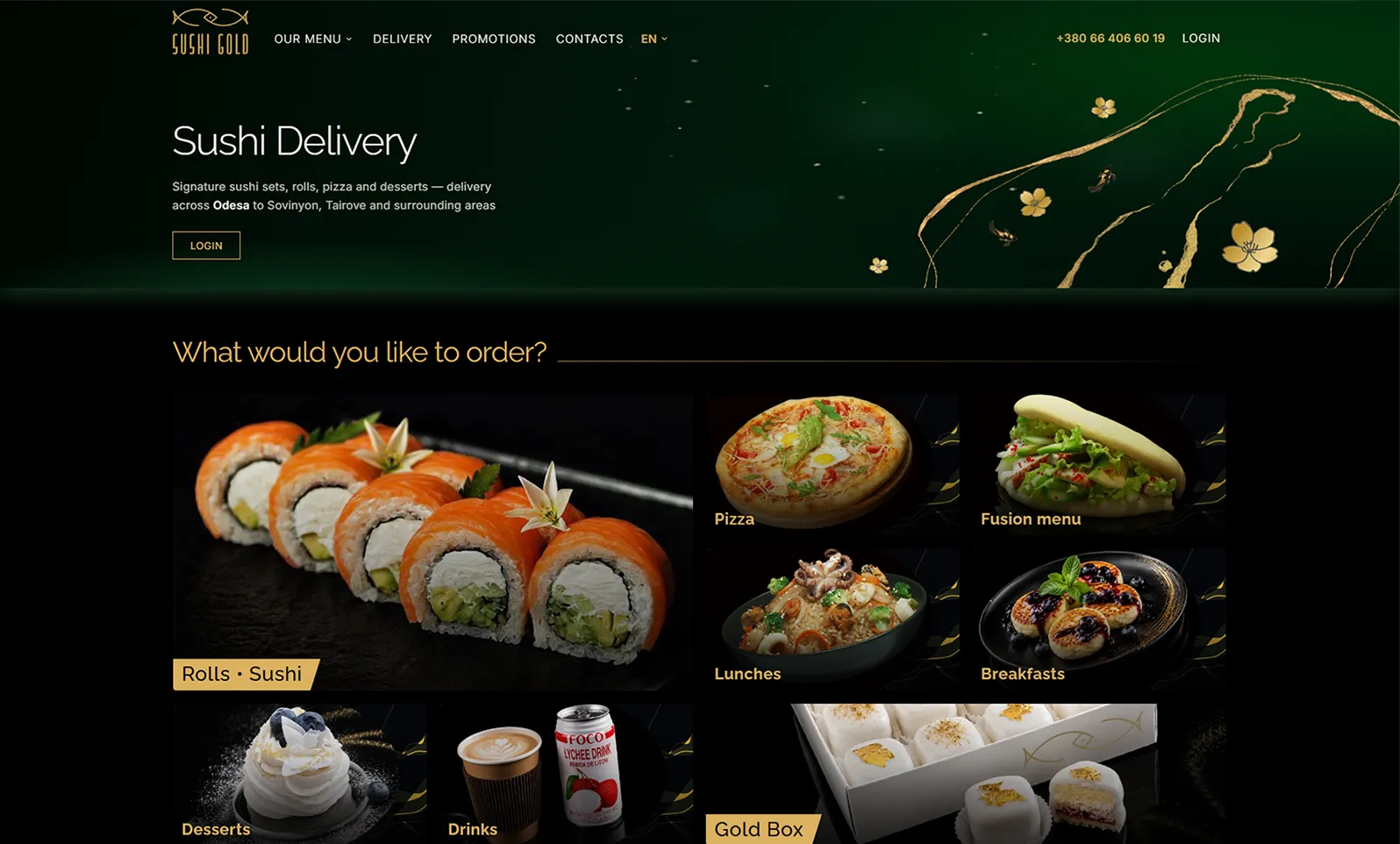
A new domain starts from zero — the search equity stayed with the old address. Content was rebuilt around what Odesa actually searches for, neighbourhood by neighbourhood and dish by dish, with structured data, a clean heading hierarchy and localised metadata in all three languages. Google Analytics from day one. The structure that makes the site legible to search engines makes it legible to AI assistants too.
Photography was treated as sales material: every dish prepared and shot to make the product the loudest element on the page.
The move also had to reach people who were not searching at all — refreshed brand assets, a printed menu, business cards, a street-side banner at the premises, and social posts announcing the new address.
Astro
Supabase
Telegram Bot API
TypeScript
Tailwind CSS
Figma
Google Analytics
Claude
Your competitors have products.
You can have a system. Let's build it.